
Discussing Master's Programmes With Students
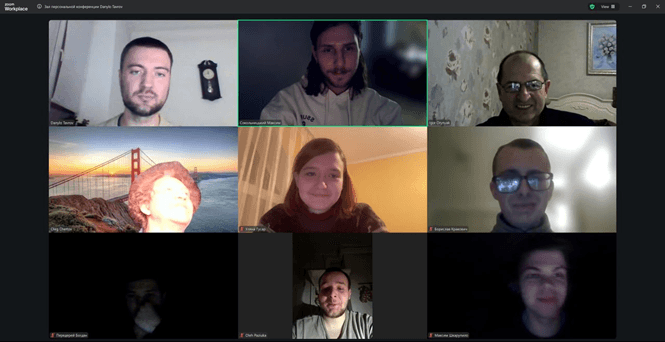
Regular consultations between the department leadership and our student body are ongoing. On December 29, a joint feedback session was held with students from both the scientific and professional Master’s programmes in "Machine Learning and Mathematical Modelling" (formerly "Data Science and Mathematical Modelling" prior to 2025). The meeting featured active contributions from the respective Programme Guarantors, Department Professors Oleg Chertov and Igor Orynyak; Head of the Department Danylo Tavrov; and Associate Professor Violeta Tretynyk. The student body was represented by scientific Master candidates Boryslav Krakovych, Maksym Sokolnytskyi, Maksym Shkarupylo, Anton Pieshkov, and Danylo Reznyk, alongside professional Master candidates Yehor Holeusov, Oleh Paziuka, and Uliana Husar.
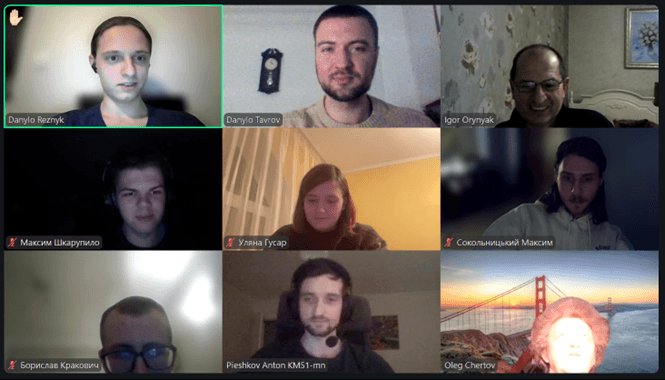
The students shared constructive insights regarding the overall architecture of their respective postgraduate programmes and the pedagogical methodologies utilized across individual modules. The feedback was categorized into specific actionable recommendations for each track:
for educational and professional programme:
Within the Modelling of Complex Systems course component, incorporate a broader array of real-world applied use cases to drive student motivation, and refine the grading criteria for individual stages of the term project.
Address the structural disconnect within the Architecture and Technologies of Big Data Systems module, ensuring core lecture topics correlate more directly with the milestones of the mandatory practical project. Additionally, clarify the continuous assessment rubrics.
Integrate more production-ready code examples and hands-on scripts into the Data Mining course component.
Expand the syllabus of the Fundamentals of Scientific Research module to include more comprehensive, step-by-step guidance on authoring peer-reviewed academic publications.
Evaluate the introduction of a dedicated elective course component focusing on generative artificial intelligence frameworks.
for educational and scientific programme:
Strengthen the theoretical mathematical foundations within all course components directly tied to machine learning.
Expand the practice of English-medium instruction (EMI) beyond the core curriculum to cover second-semester elective modules.
- Strengthen the practical skills related to pedagogical performance.
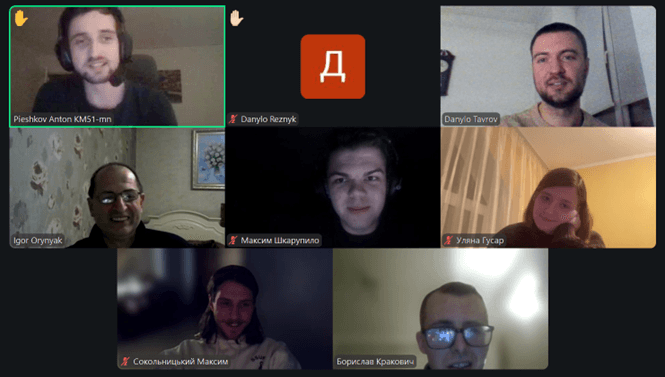
Overall, the research-focused students expressed strong satisfaction with the post-2025 curriculum enhancements, specifically praising the ramped-up preparation for academic publishing, the delivery of first-semester modules entirely in English (facilitated via the global MATHS-DISC project), and the deepened rigor of their advanced mathematics training.
Concurrently, the professional track students highly commended the practical orientation of all course components, noting their immediate relevance and high utility for career progression within the technology sector.