
Discussing Bachelor's Programme With Students
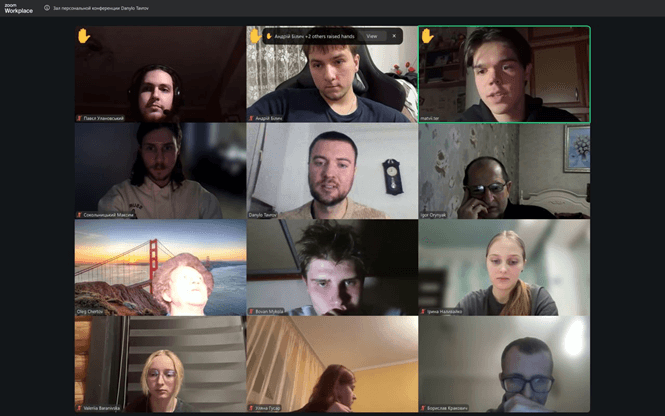
Regular consultations between the department leadership and our student body are ongoing. On December 22, a feedback session was held with students from the undergraduate Educational and Professional Programme in "Machine Learning and Mathematical Modelling" (formerly "Data Science and Mathematical Modelling" prior to 2025). The meeting featured active contributions from the Programme Guarantor, Associate Professor Violeta Tretynyk; Head of the Department Danylo Tavrov; and Department Professors Oleg Chertov and Igor Orynyak. The student body was represented by second-year student Paviel Ulanovskyi; third-year students Mykola Bovan, Matvii Tereshchenko, and Iryna Nalyvaiko; and fourth-year students Valeriia Baranivska and Andrii Bilych.
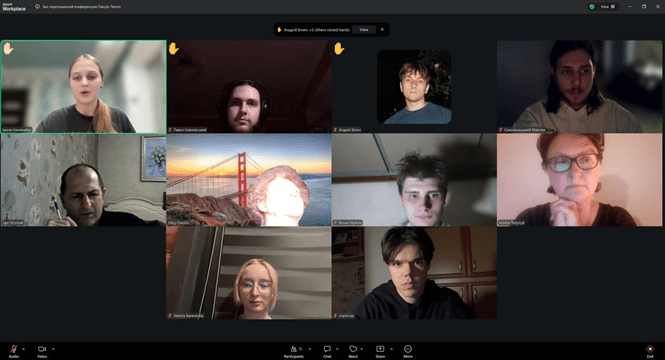
The students shared constructive insights regarding both the overall architecture of the degree programme and the specific pedagogical methodologies used across individual course components and lecture series. The following key recommendations were brought forward by the student representatives:
Incorporate a higher volume of practical, programming-based coursework into the syllabus for the Mathematical Statistics course component.
Explore delivering a larger portion of primary lectures using the Flipped Classroom (inverted lesson) instructional model.
Introduce more concrete applications of lattice theory within the Discrete Mathematics course component.
Expand avenues for students to showcase the findings of their independent study and research via formal presentations.
Introduce a new, potentially elective, course component in Measure Theory.
Optimise the core content of the Computer Architecture course component to eliminate redundant overlapping material covered in other disciplines.
Introduce the Fundamentals of Machine Learning course component significantly earlier in the academic timeline—potentially during the second year—or, alternatively, decompress the existing module by distributing a substantial portion of its introductory concepts into prerequisite courses.
Evaluate the addition of a new specialized elective course focused on domain-specific applications of artificial intelligence (e.g., Applications of Machine Learning in Chemistry).